Part 1 Understanding Istio
Chapter 1 Introducing the Istio service mesh
1.1 Challenges of going faster
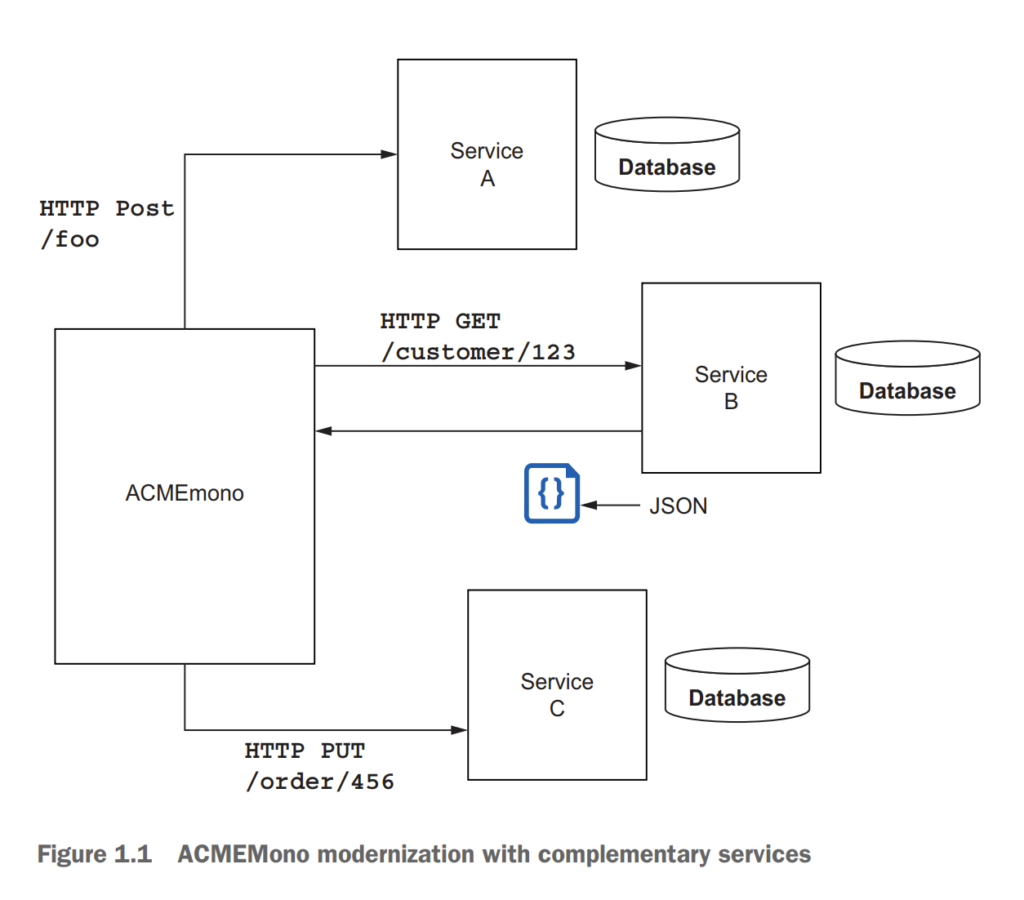
1.1.1 Our cloud infrastructure is not reliable
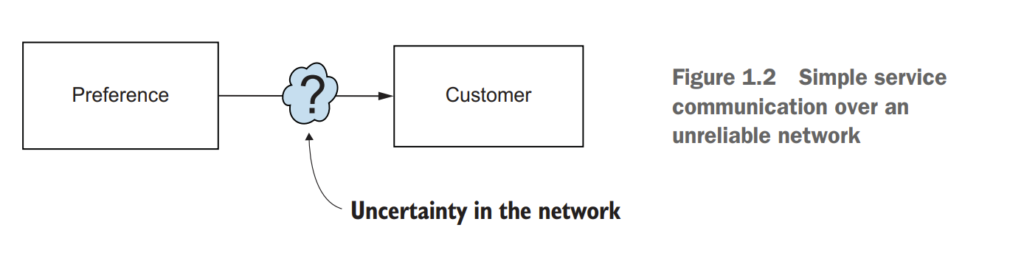
1.2 Solving these challenges with application libraries
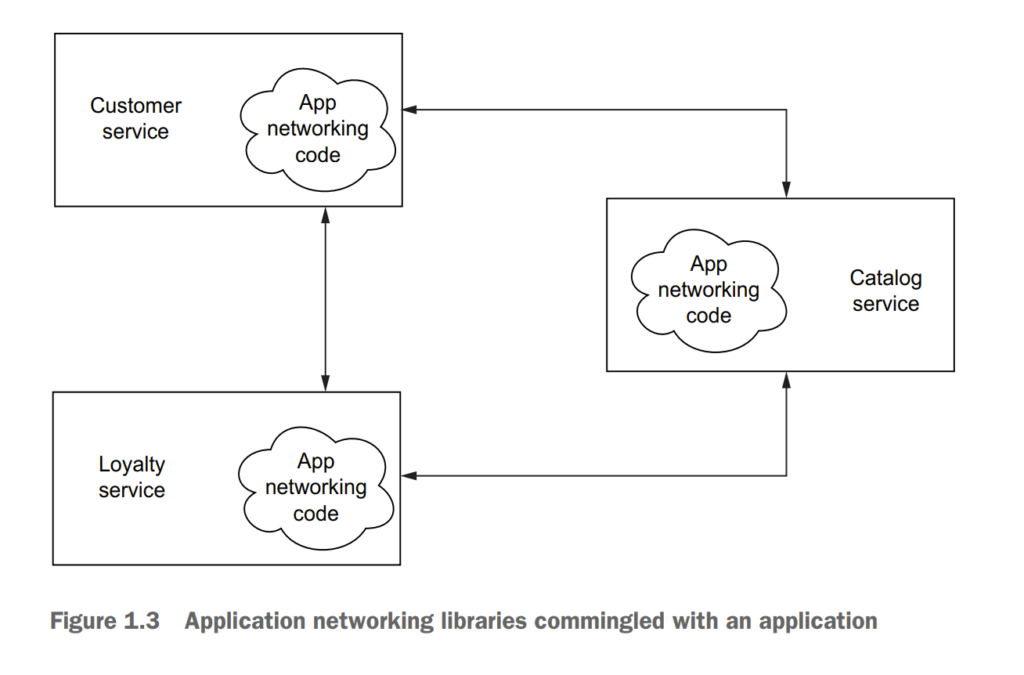
1.3 Pushing these concerns to the infrastructure
1.3.2 Meet the Envoy proxy
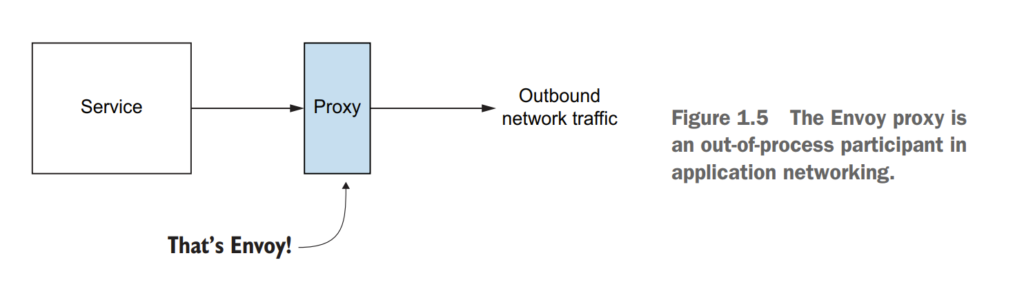
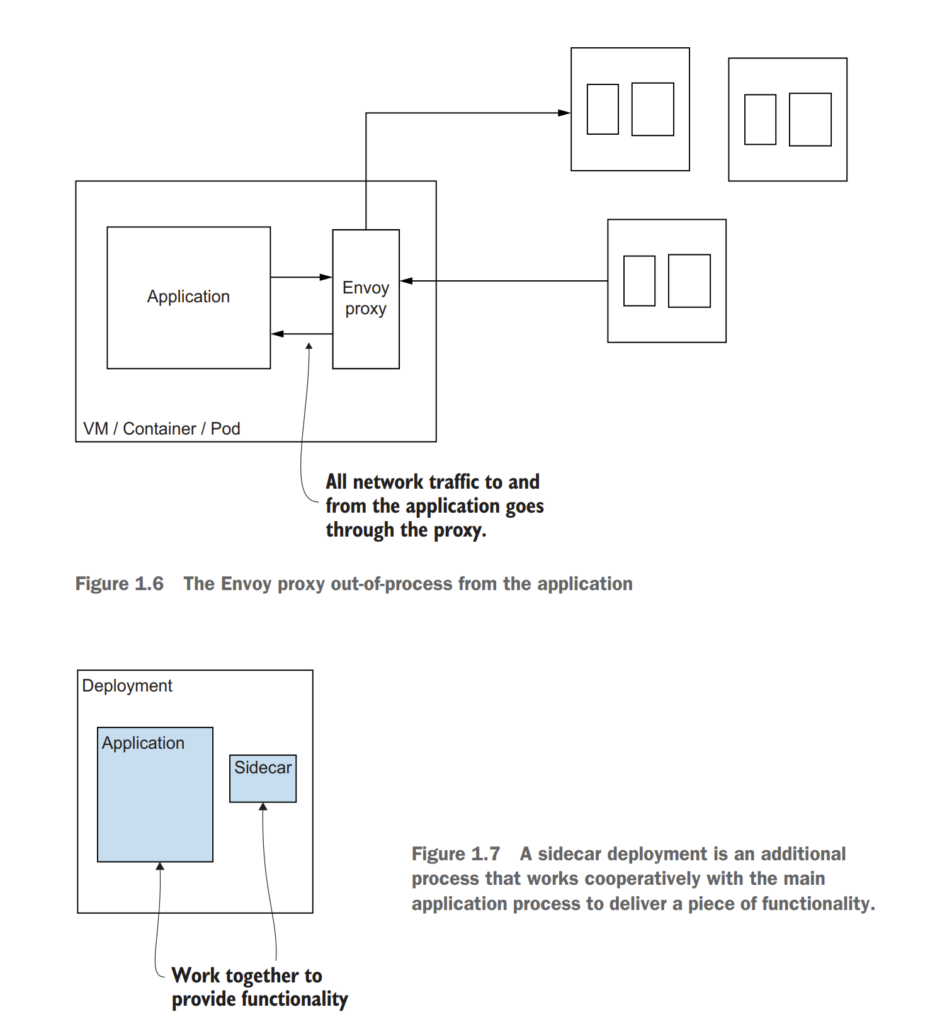
1.4 What’s a service mesh?
A service mesh is a distributed application infrastructure that is responsible for handling network traffic on behalf of the application in a transparent, out-of-process manner.
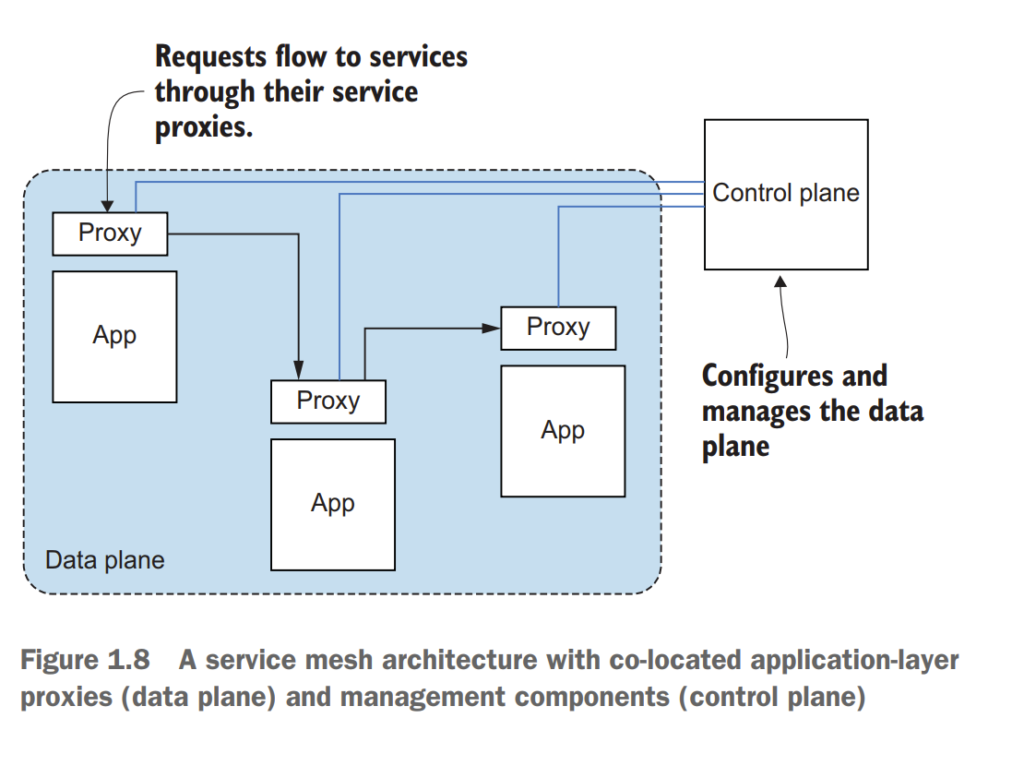
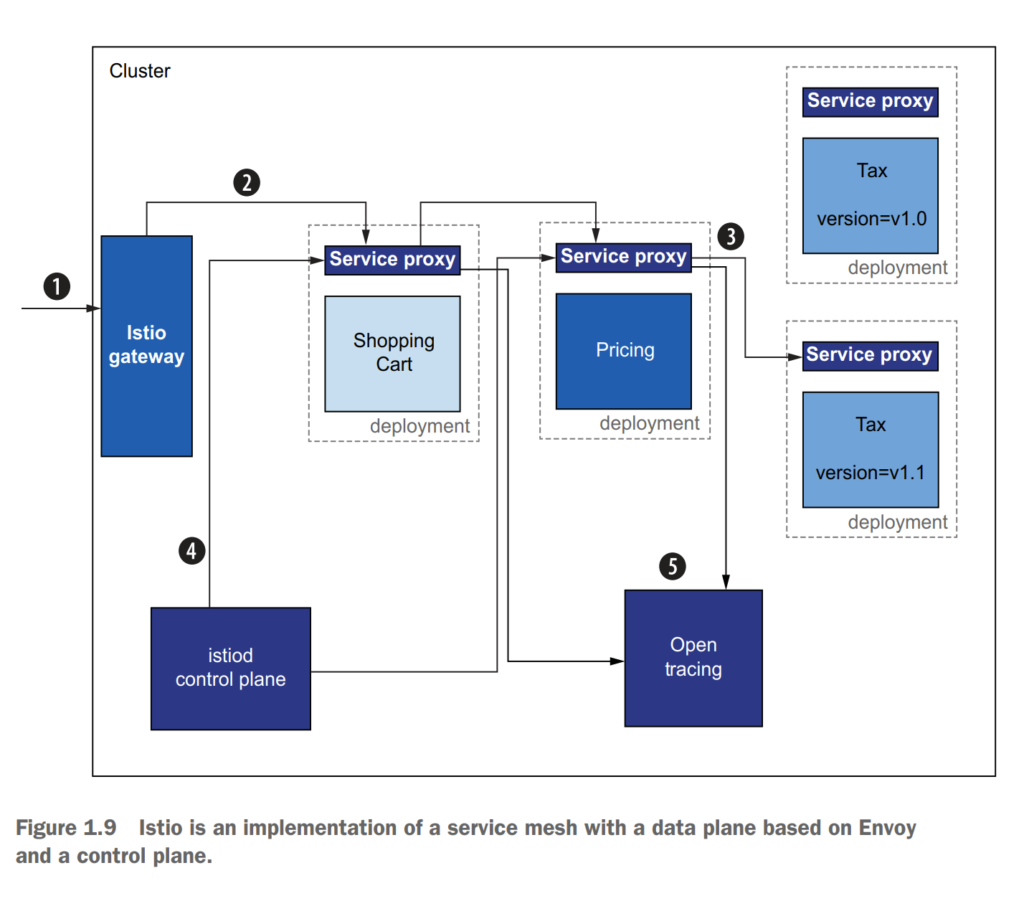
1.5 Introducing the Istio service mesh
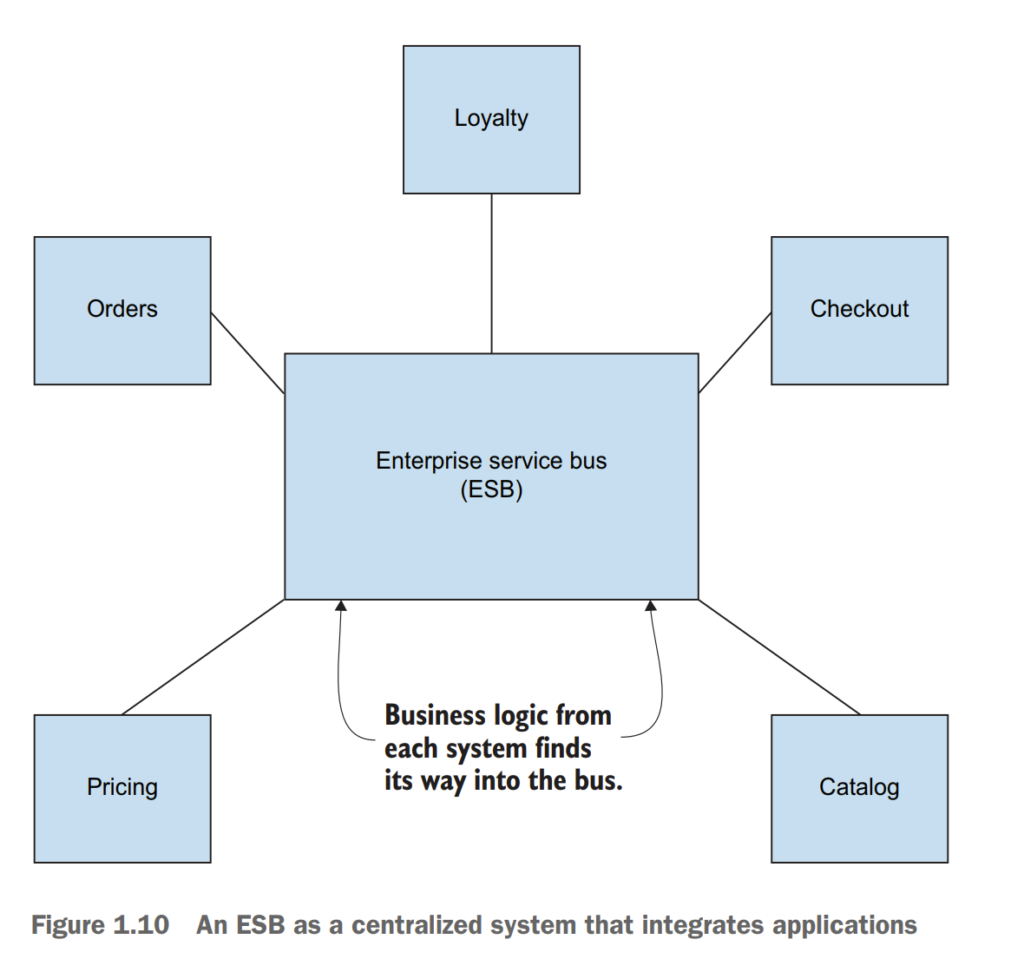
1.5.1 How a service mesh relates to an enterprise service bus
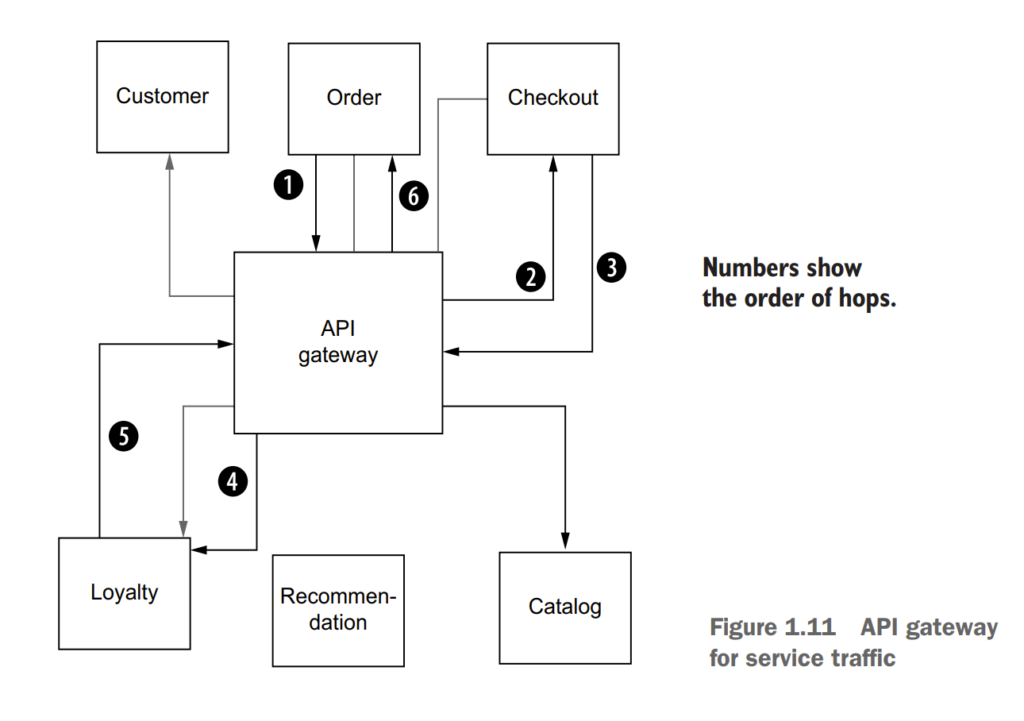
1.5.2 How a service mesh relates to an API gateway
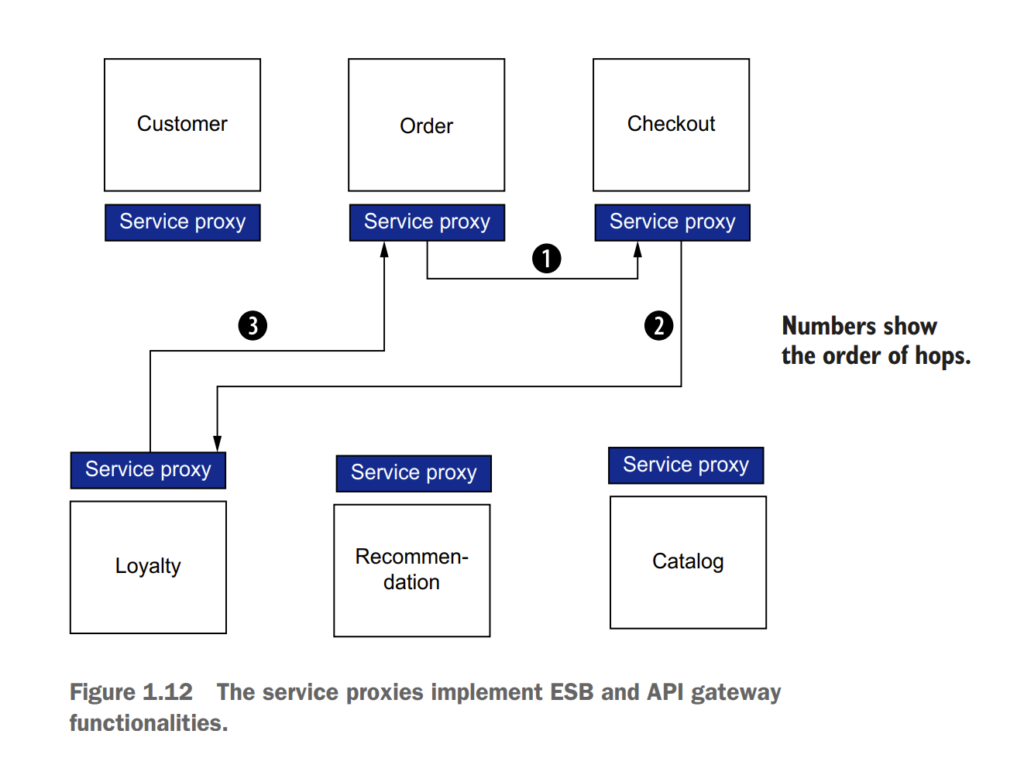
1.5.4 Where Istio fits in distributed architectures
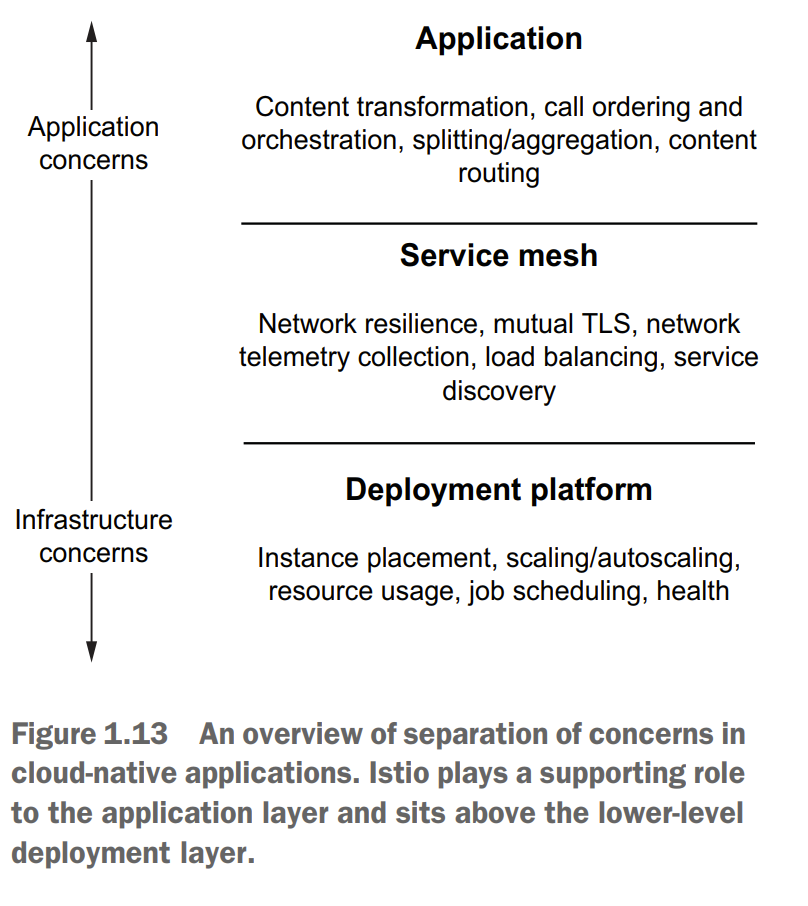
Chapter 2 First steps with Istio
2.1 Deploying Istio on Kubernetes
kubectl get nodes

curl -L https://istio.io/downloadIstio | ISTIO_VERSION=1.13.0 sh -

istioctl x precheck

istioctl install --set profile=demo -y

kubectl get pod -n istio-system

istioctl verify-install

kubectl apply -f ./samples/addons
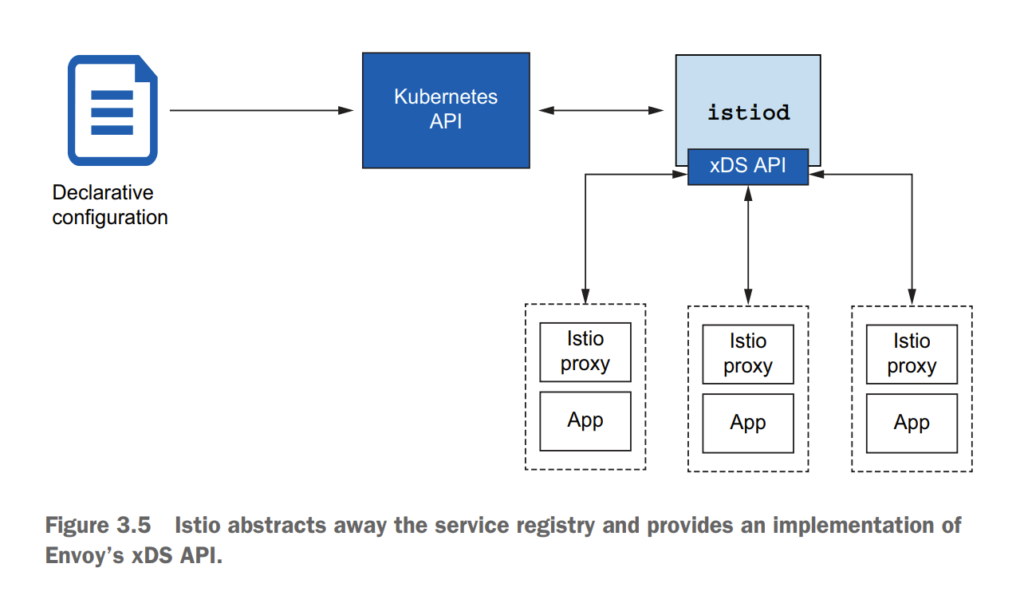
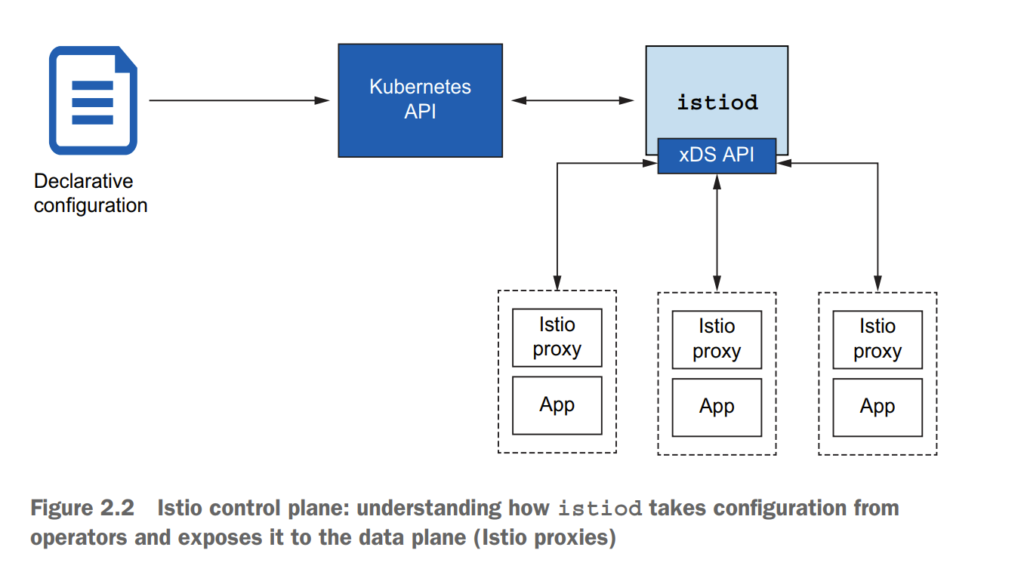
2.2 Getting to know the Istio control plane
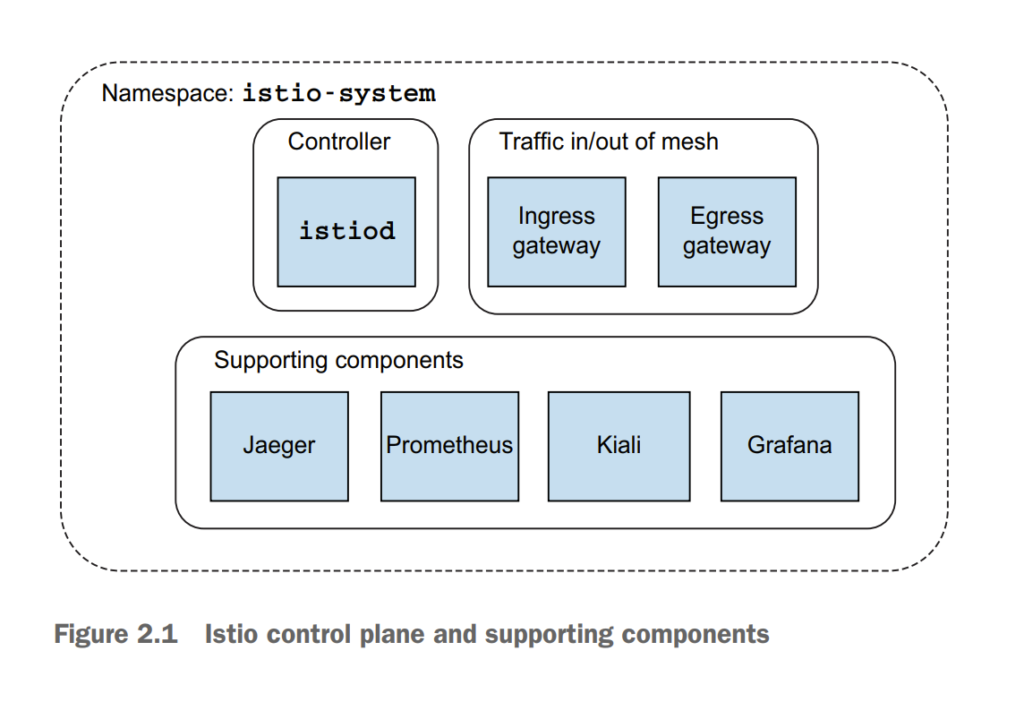
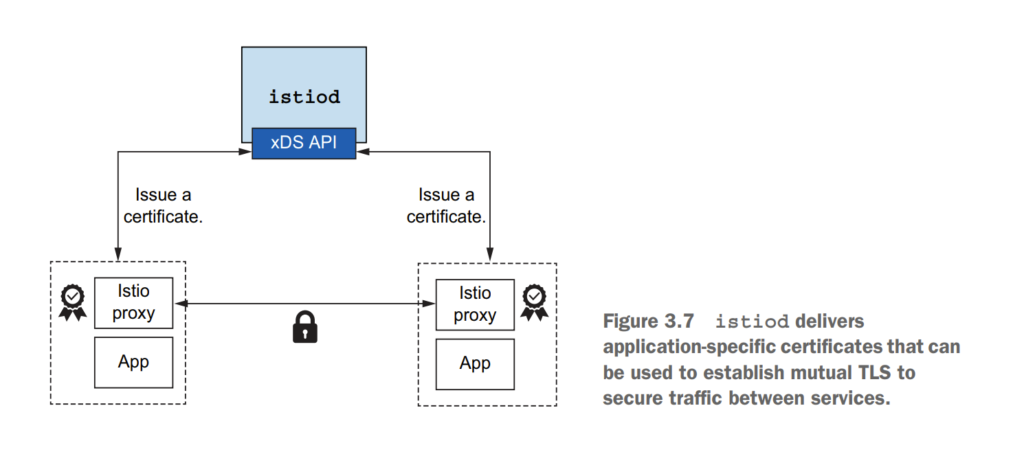
2.2.1 Istiod
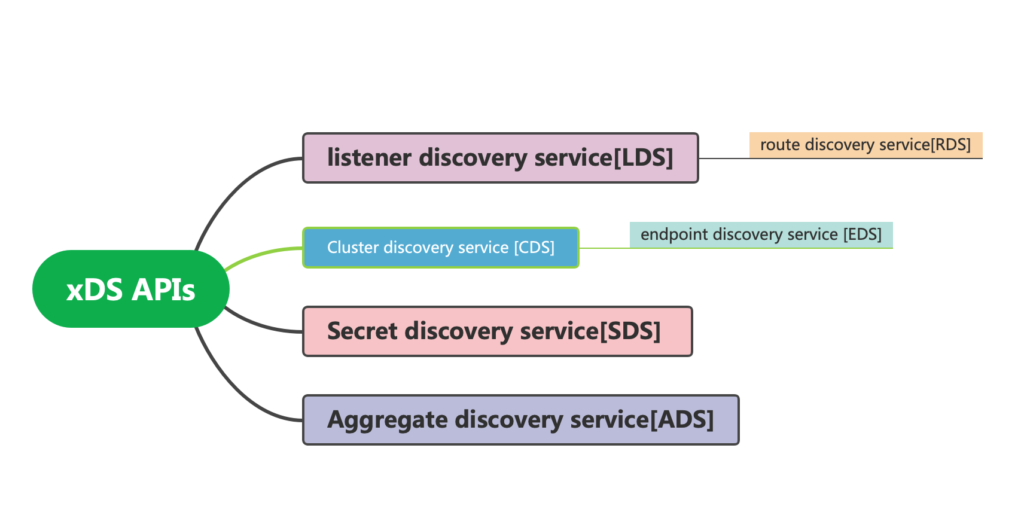
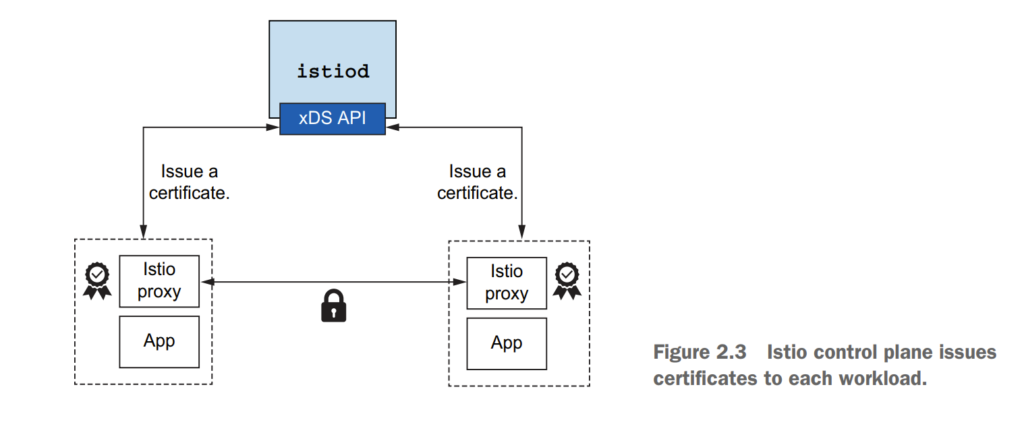
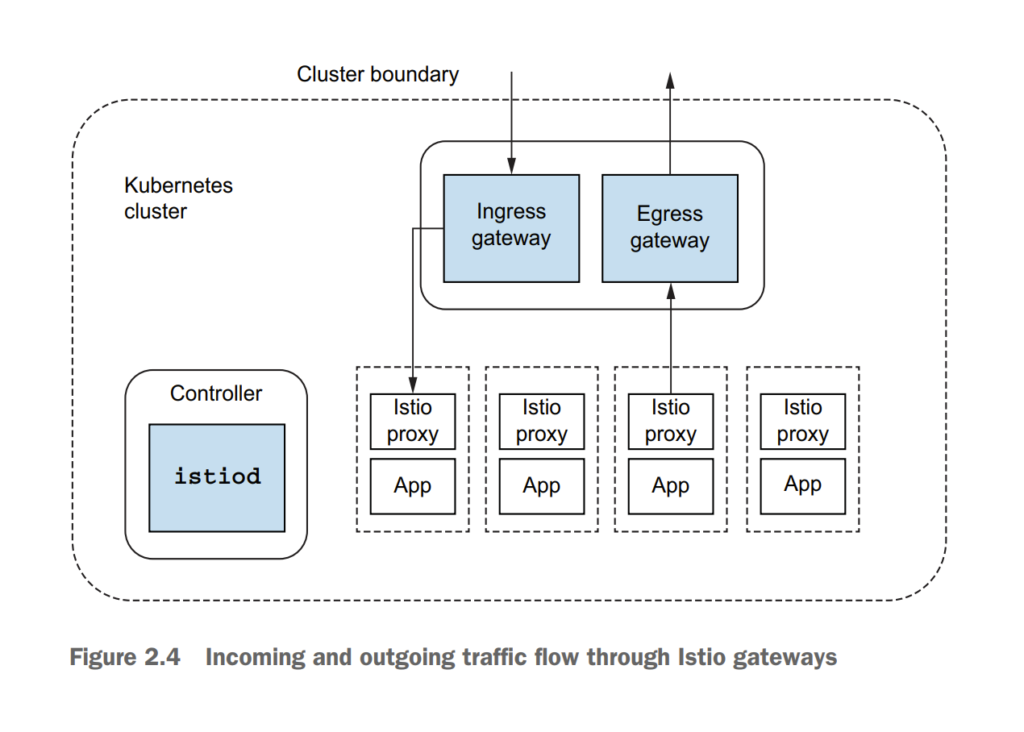
2.2.2 Ingress and egress gateway
2.3 Deploying your first application in the service mesh
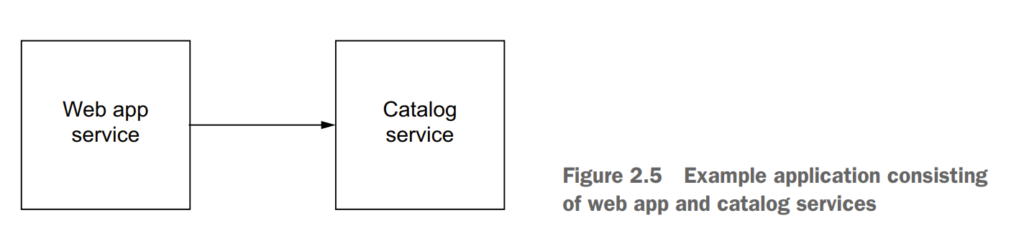
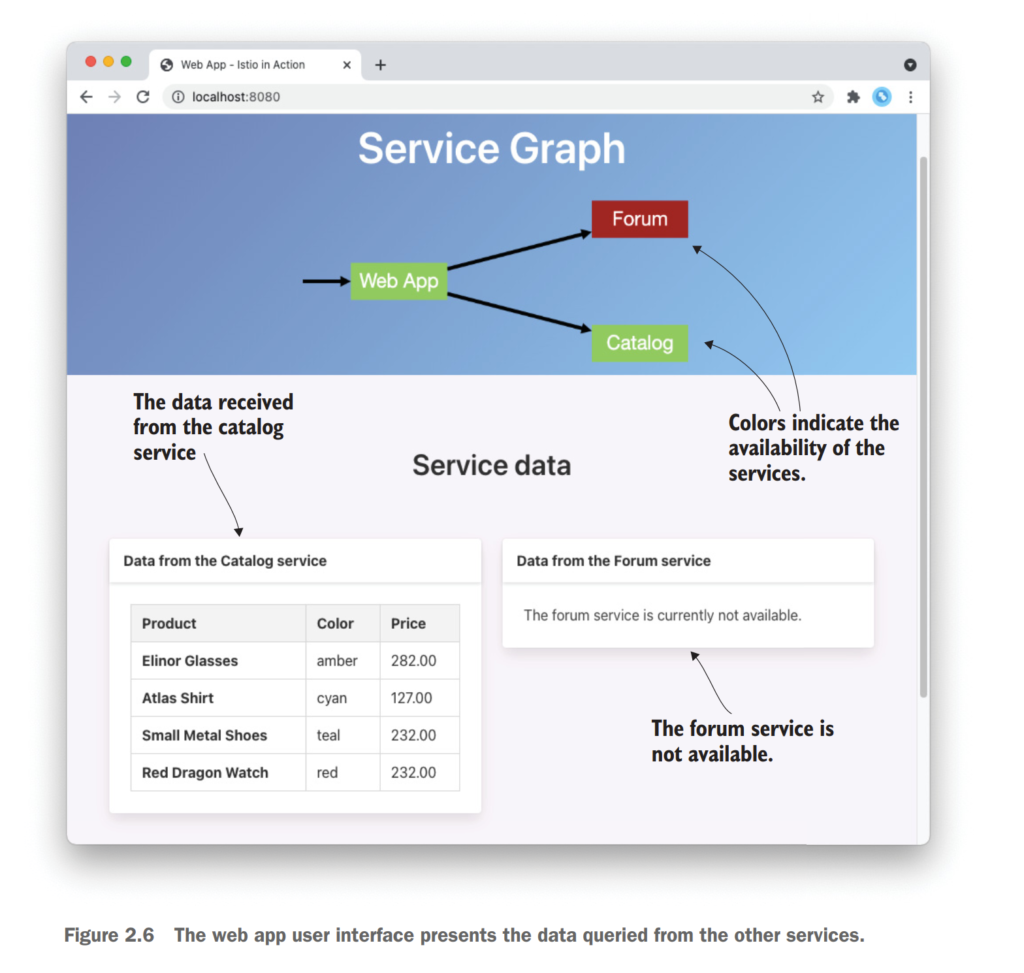
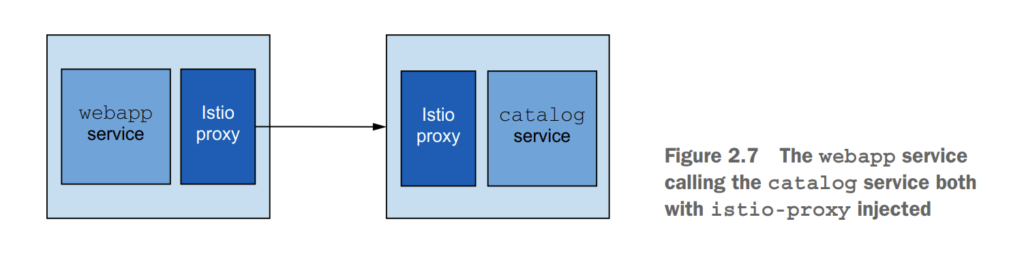
2.4 Exploring the power of Istio with resilience,observability, and traffic control
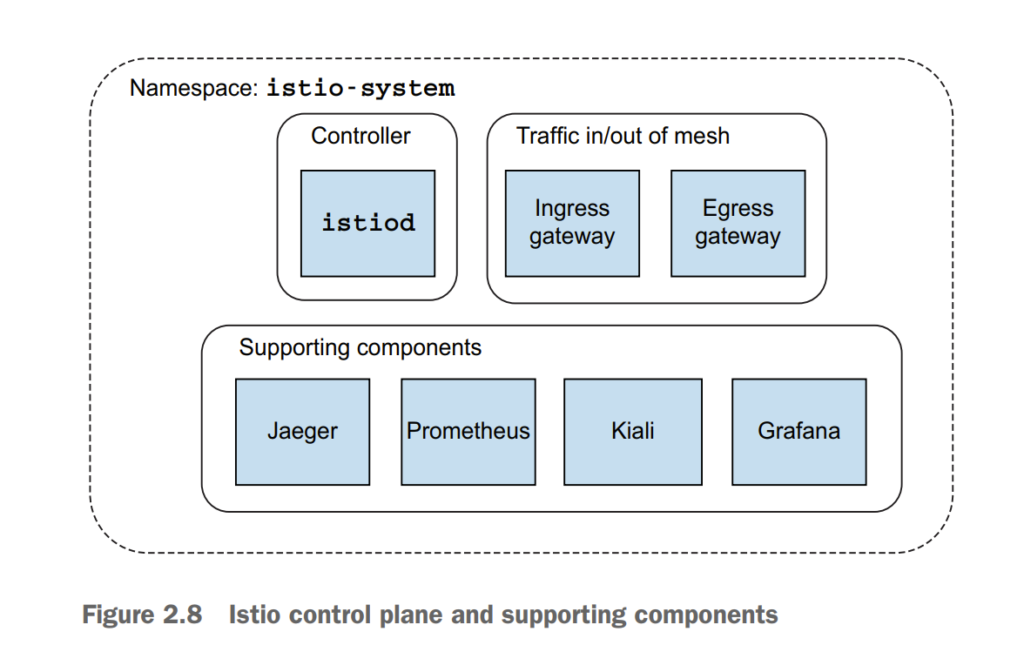
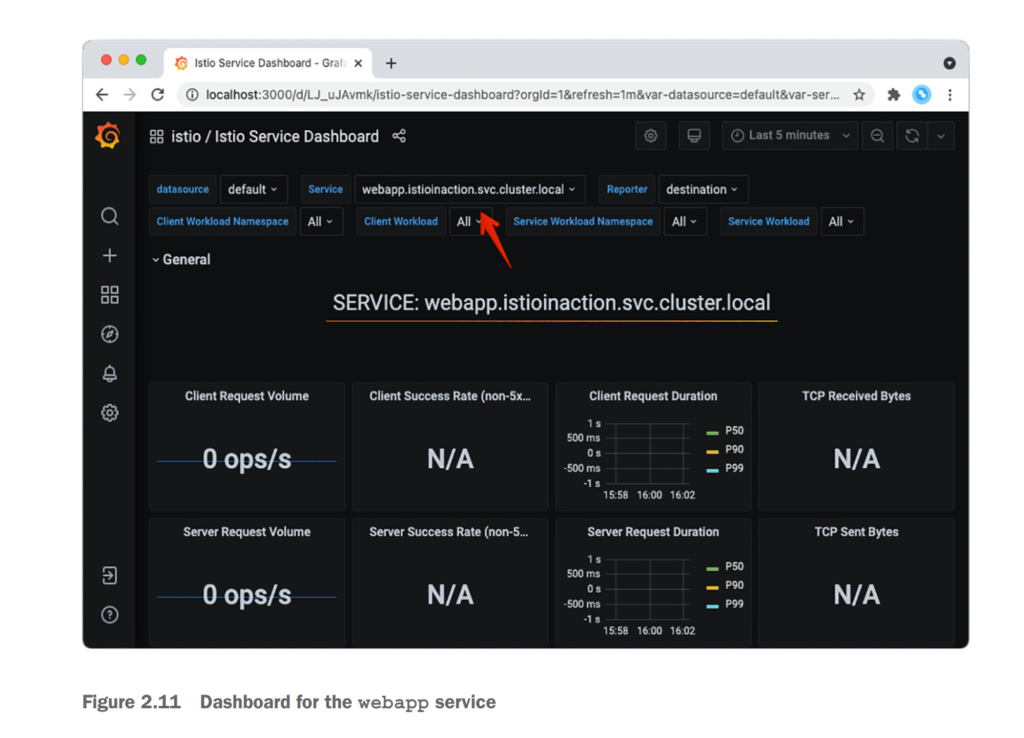
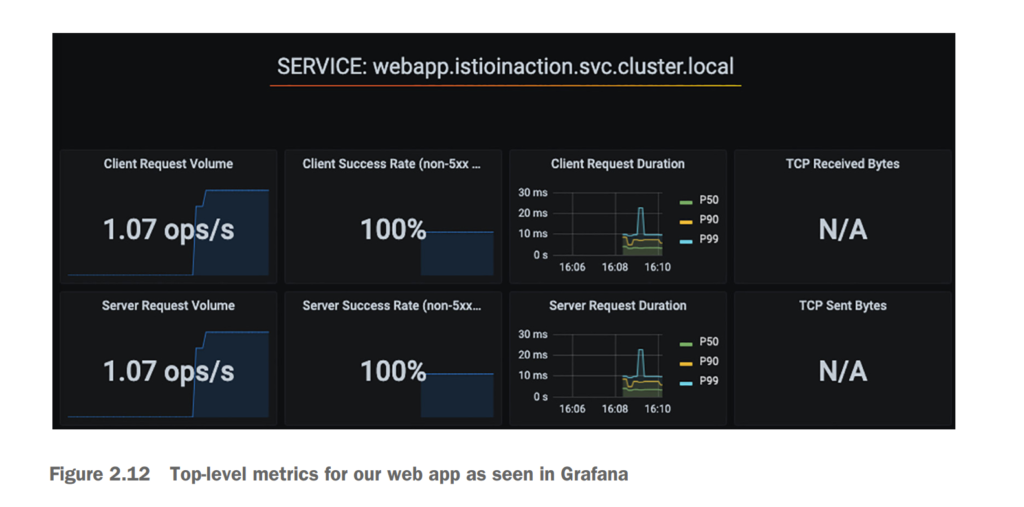
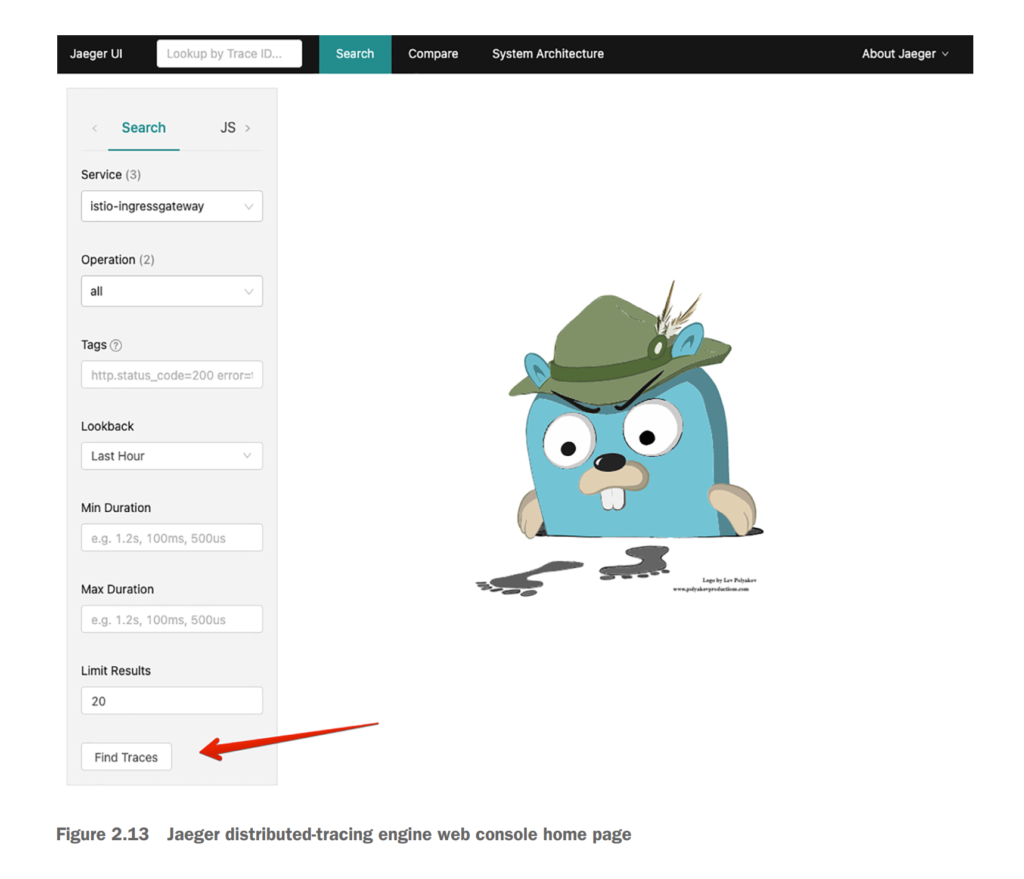
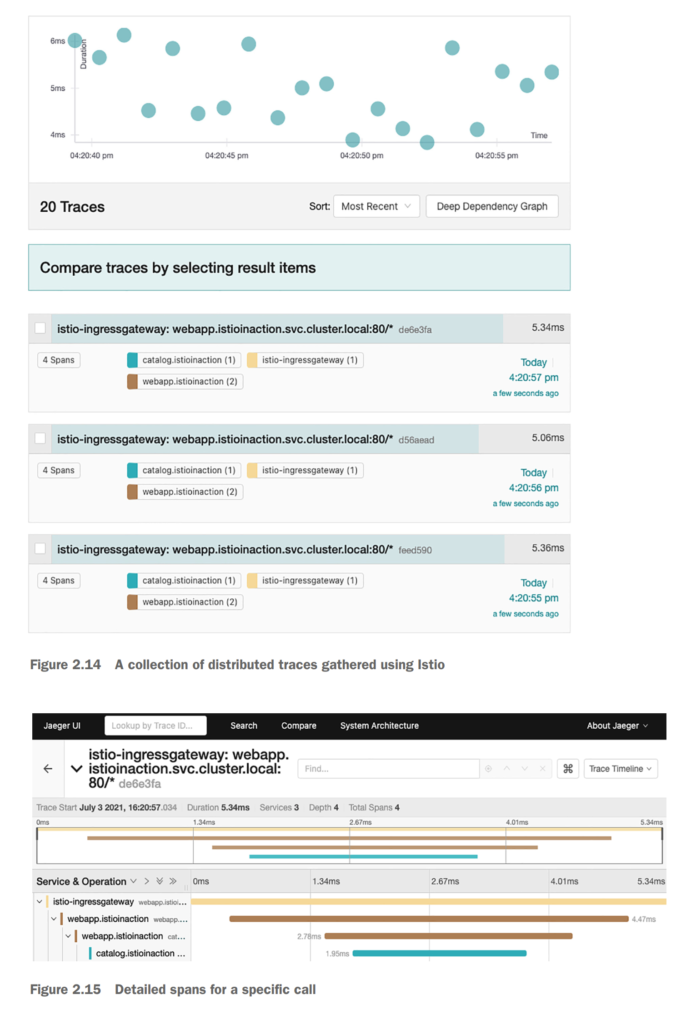
2.4.2 Istio for resiliency
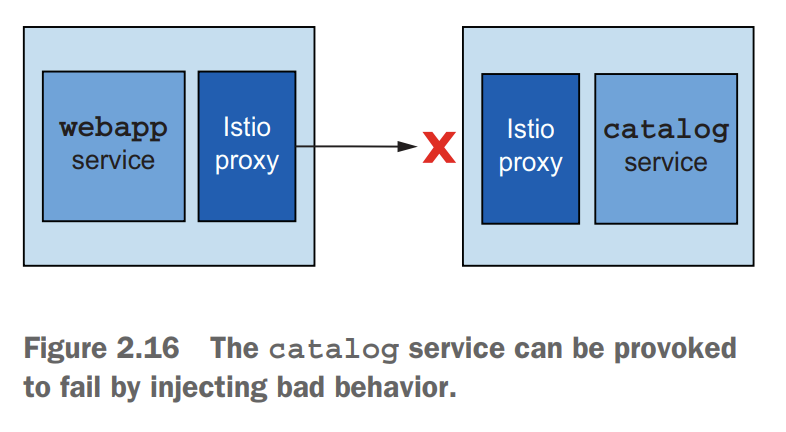
Chapter 3 Istio’s data plane: The Envoy proxy
3.1 What is the Envoy proxy?
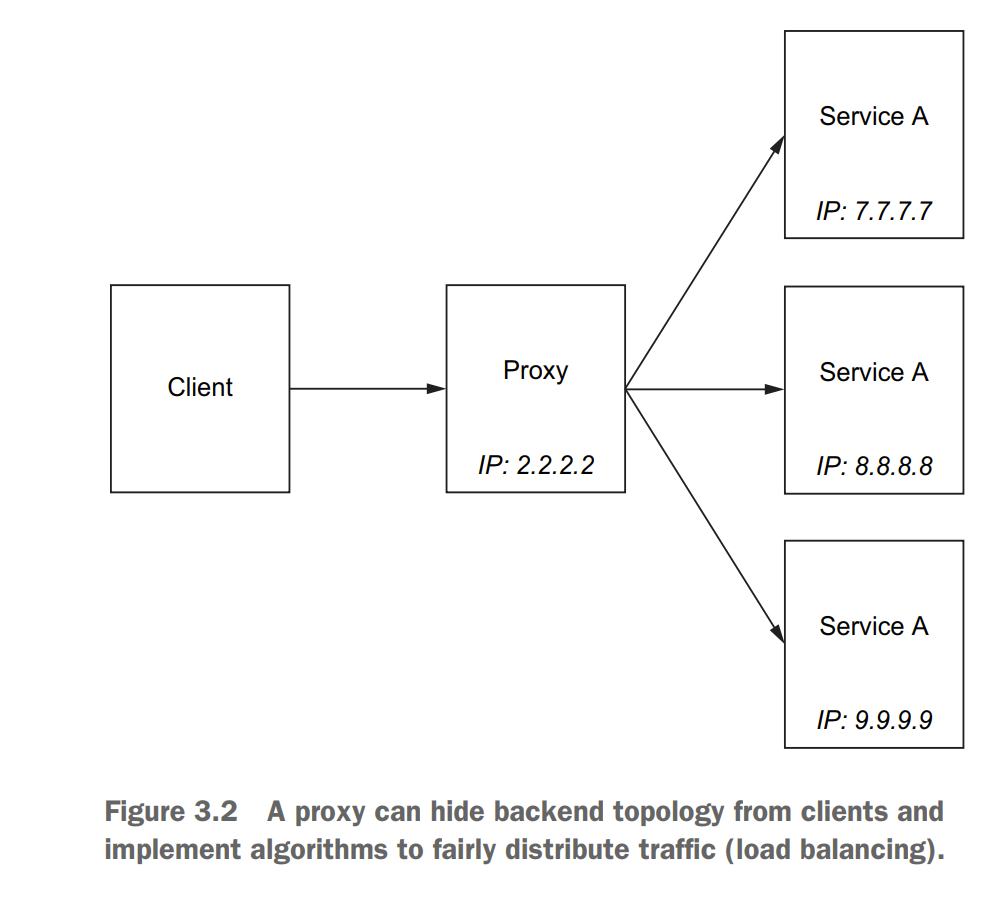
3.1.1 Envoy’s core features
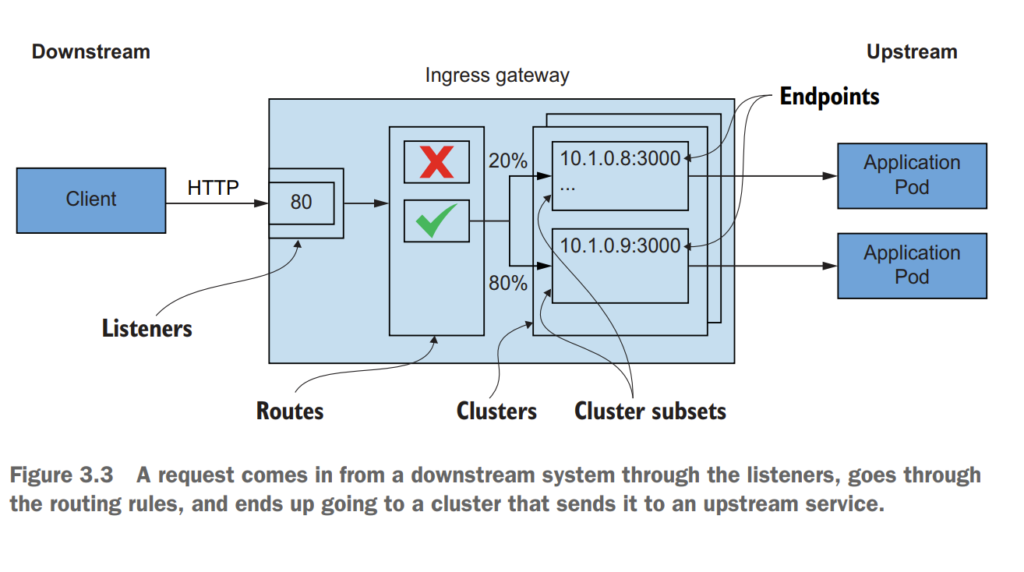
- SERVICE DISCOVERY
- LOAD BALANCING
- TRAFFIC AND REQUEST ROUTING
- TRAFFIC SHIFTING AND SHADOWING CAPABILITIES
- NETWORK RESILIENCE
- HTTP/2 AND GRPC
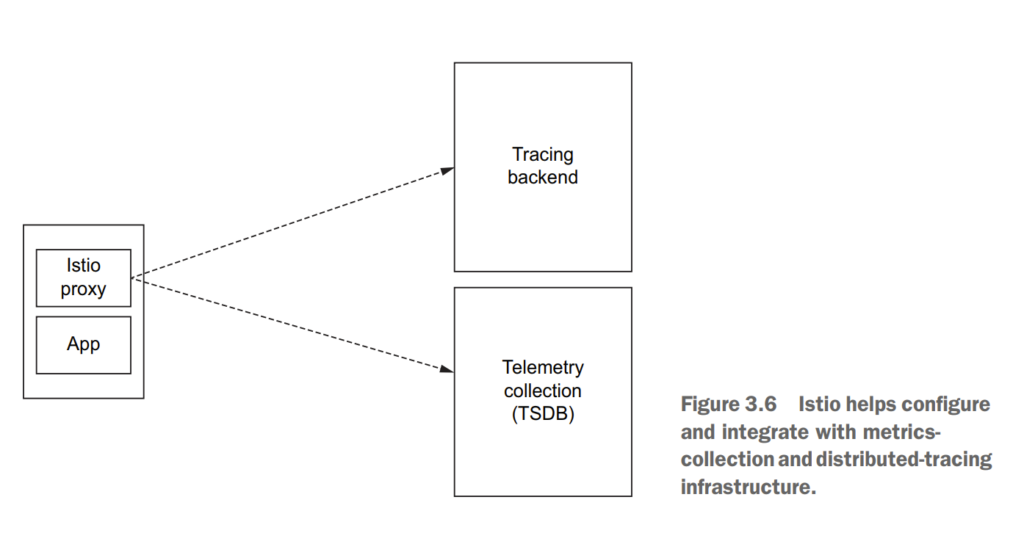
- OBSERVABILITY WITH METRICS COLLECTION
- OBSERVABILITY WITH DISTRIBUTED TRACING
- AUTOMATIC TLS TERMINATION AND ORIGINATION
- RATE LIMITING
- EXTENDING ENVOY
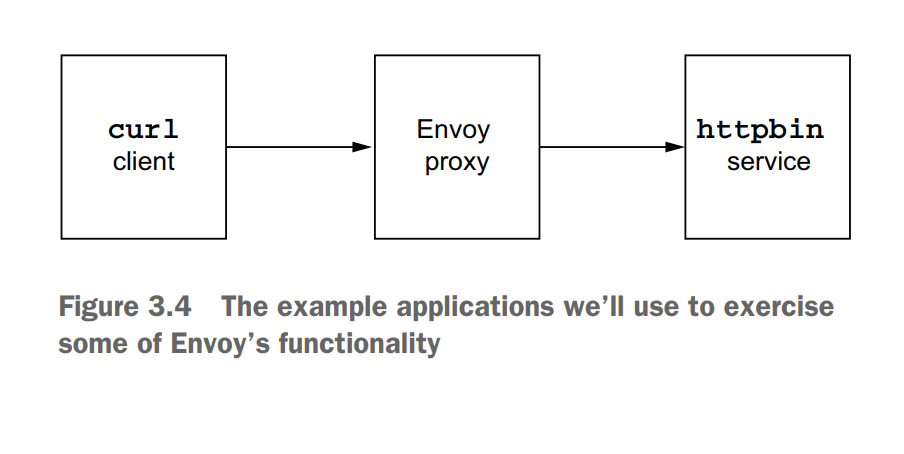
3.3 Envoy in action
3.4 How Envoy fits with Istio